How to do the three bows in Buddhism, step by step
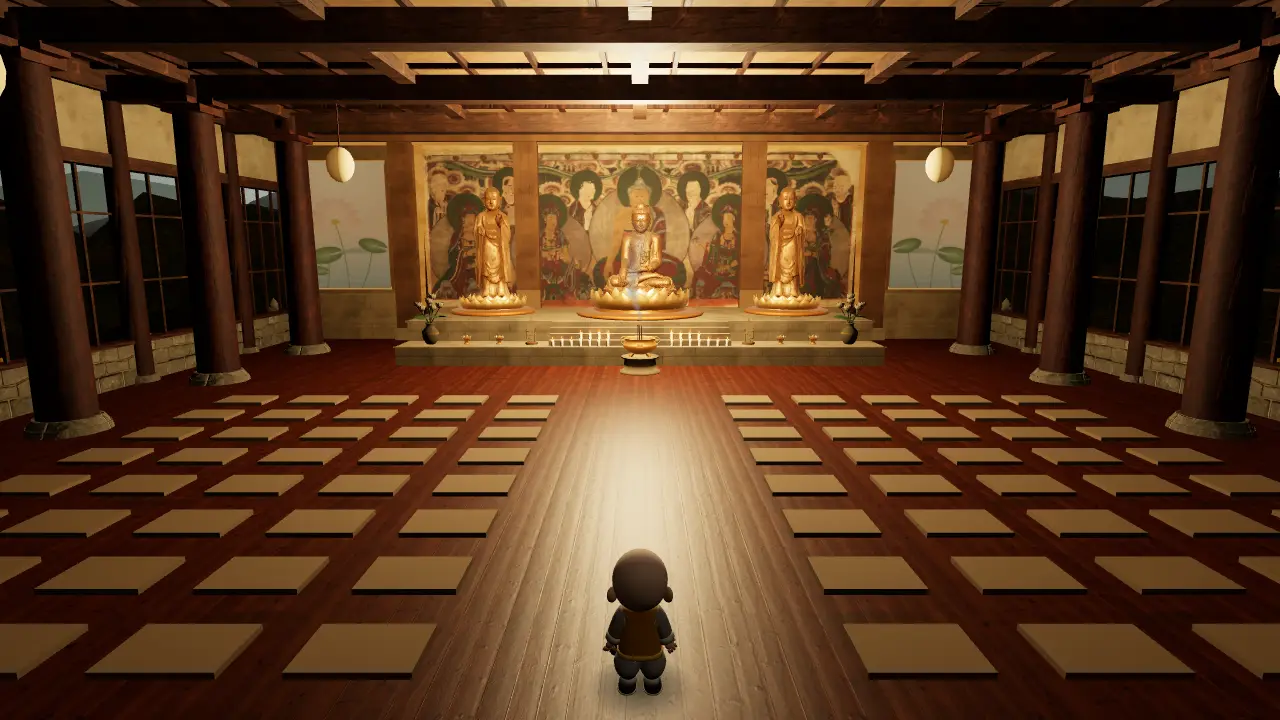
In Buddhism, the three bows are made one each to the Buddha, the Dharma (his teaching) and the Sangha (the community of practitioners), together called the Triple Gem. To make one, you join your palms, lower yourself to the floor, touch your forehead down, and rise again. It is one of the most widely shared gestures across Buddhist traditions, though its details vary.
What the three bows mean
A bow is a physical way of setting aside self-importance. It is not worship of a statue. Many teachers describe it as respect for what the image stands for, and for the possibility of awakening in everyone. Bowing three times is common at the start of a visit to a hall, before and after meditation, and when greeting a teacher.
How to do a full bow
This is a common form in Korean and many other Mahayana temples.
- Stand with your palms joined at chest height, fingers pointing up. This gesture is called *anjali* in Sanskrit.
- Bend your knees and lower them to the floor, keeping your back fairly straight.
- Place your hands on the floor in front of you and lower your forehead between them, so that your forehead, both hands and both knees touch the ground.
- Pause for one slow breath.
- Rise by pushing back with your hands, returning to standing with your palms joined.
Move slowly, and let your breath set the pace. Three bows done carefully are worth more than many done in a hurry.
How it differs between traditions
- Thai and other Theravada temples: people usually bow from a kneeling position, with hands, knees and forehead touching the floor, without standing up in between. This five-point bow is called *benjangapradit* in Thai.
- Japanese temples: three prostrations are made in some schools, while many lay visitors simply join their palms and bow from the waist.
- Tibetan traditions: some practitioners make full-length prostrations, stretching out flat along the ground.
If you are at a temple, watch what others do and follow them. No one expects a visitor to get it perfect.
If your knees or back hurt
You do not need to get to the floor. A standing bow from the waist with your palms joined is widely accepted, and so is a seated one. Choose what you can do without pain, and speak to a doctor if you have an injury.
About 108 bows
Some practitioners make 108 bows, a number often linked to the 108 afflictions of the mind. It takes around 20 minutes and is real exercise, so build up gradually. A mala is a simple way to keep count.
Where the three bows come from
The number three is not arbitrary. It follows one of the oldest formulas in Buddhism, the going for refuge. In Pali the words are *Buddham saranam gacchami, Dhammam saranam gacchami, Sangham saranam gacchami*: "I go for refuge to the Buddha, I go for refuge to the Dhamma, I go for refuge to the Sangha." The formula is recited three times over, and it is widely used to mark a person's commitment to the path. Bowing three times gives the same three objects a physical form.
The meaning of "refuge" is often misunderstood. In his writing on devotion in Buddhism, the Theravada monk and scholar Nyanaponika Thera argues that devotion is not an appeal to a god to intervene. It is a form of respect that can steady the mind and turn it toward the qualities being honoured. Other schools frame this in their own ways, but in very few of them is a bow simply a request for something.
What to think about during a bow
Nothing is required, and many practitioners simply feel the movement. If you would like something to rest your mind on, these are common approaches:
- One object for each bow. Hold the Buddha in mind on the first bow, the teaching on the second, and the community of practitioners on the third.
- The body itself. Notice your knees touching down, the coolness of the floor at your forehead, and the effort of getting up.
- The breath. Breathe out as you go down, and breathe in as you come up.
- A person. Some people dedicate a bow to someone they are thinking of. This is a personal habit, and traditions differ on how they understand it.
Whichever you choose, go slowly. It is hard to notice anything during a bow that takes one second.
Mistakes first-timers often make
Nobody at a temple is likely to correct you, but these are the things people most often wonder about afterward.
- Hurrying. This is by far the most common one. A slow bow looks and feels very different from a quick one.
- Bowing in a walkway. In a real hall, step to the side rather than the centre if others are coming and going, and leave the middle for ceremonies.
- Pointing your feet at the altar. When you kneel, your feet are behind you, which is fine. When you sit back afterward, tuck them away, especially in Southeast Asia. See our temple etiquette notes.
- Stopping at the wrong moment. Don't bow right in front of someone who is already bowing. Wait a moment or pick another spot.
- Worrying about your hands. Finger positions vary from temple to temple. Unless you have been shown a particular way, joined palms and a sincere attempt are all you need.
How many bows, and why the number changes
Three is the usual number for a visitor, but it is not the only one. Across Buddhist cultures, prostrations are often made in counted sets, and sets of 3, 7, 21 and 108 are all well attested. Some serious practitioners take on much larger numbers over months or years, particularly in Korean and Tibetan communities. Korean temple-stay programmes commonly list 108 bows among their activities, so it is something a visitor can try with a teacher nearby.
If you would like to work up to more, here is a gentle way to start:
- First week: three slow bows each day.
- Second week: seven bows, without rushing.
- Third week: twenty-one bows, resting if you need to.
- When you feel ready: 108 bows, split across a day if you prefer. A folded blanket under your knees helps.
This is not a fitness plan, and there is no reward for finishing. Stop if you feel pain or dizziness, and speak with a doctor first if you have a condition affecting your heart, joints or blood pressure.
Bowing at home
You do not need an altar or any special object. A clean patch of floor and a moment when no one needs you is plenty. If you have a picture or a small statue that means something to you, you can face it. If not, some people face a window, or nothing in particular.
A short routine could be: stand quietly for three breaths, make three slow bows, and then sit for a minute before getting up. Done in the morning, it can mark the start of the day. Some people add a few minutes of meditation, and Buddhist traditions often pair the two in that order.
Questions people often ask
Do I have to believe in anything to bow? No one at Sunava will ask, and many temples welcome visitors who simply wish to show respect. If bowing to an image conflicts with your own faith, it is fine to stand quietly or join your palms instead. Nobody will take offence.
Is it wrong to bow in socks or bare feet? Neither is a problem. In most halls where people make full bows, shoes have already been removed.
Should I do it in front of monks? In many traditions, lay people bow to monks and nuns as a sign of respect, particularly when formally greeting a teacher. As a casual visitor, joined palms and a small bow from the waist are usually enough.
Is it the same as *wai*, or *gassho*? Those are greetings with joined palms. In Thailand it is called the *wai*, and in Japan *gassho*. A full bow begins from the same gesture and goes on to the floor.
Bowing as a pause in the day
You do not have to wait for a visit to a temple. Many people find that three slow bows work well as a marker between two parts of the day, such as before starting work, after coming home, or before going to bed. It takes under two minutes and needs no equipment. The movement also gets you out of your chair, which meditation does not.
Try to keep it free of goals. You are not trying to feel a particular way, and it does not matter if your mind is elsewhere during the second bow. Just notice that it was, and do the third one a little more slowly. If you would like to add a quiet sound, strike a moktak once before you begin and once when you have finished, and leave it there.
Try it at the altar
In the Sunava main hall, stand before the altar and press Bow three times. Your character makes each bow slowly, and each one is added to the temple's count for the last 24 hours, so you can see you are not bowing alone.
Sources
- Tisarana: The Three Refuges, Access to Insight
- Devotion in Buddhism, by Nyanaponika Thera, Access to Insight
- Prostration (Buddhism), Wikipedia
- Templestay, Cultural Corps of Korean Buddhism