5-minute meditation for beginners: a simple way to start
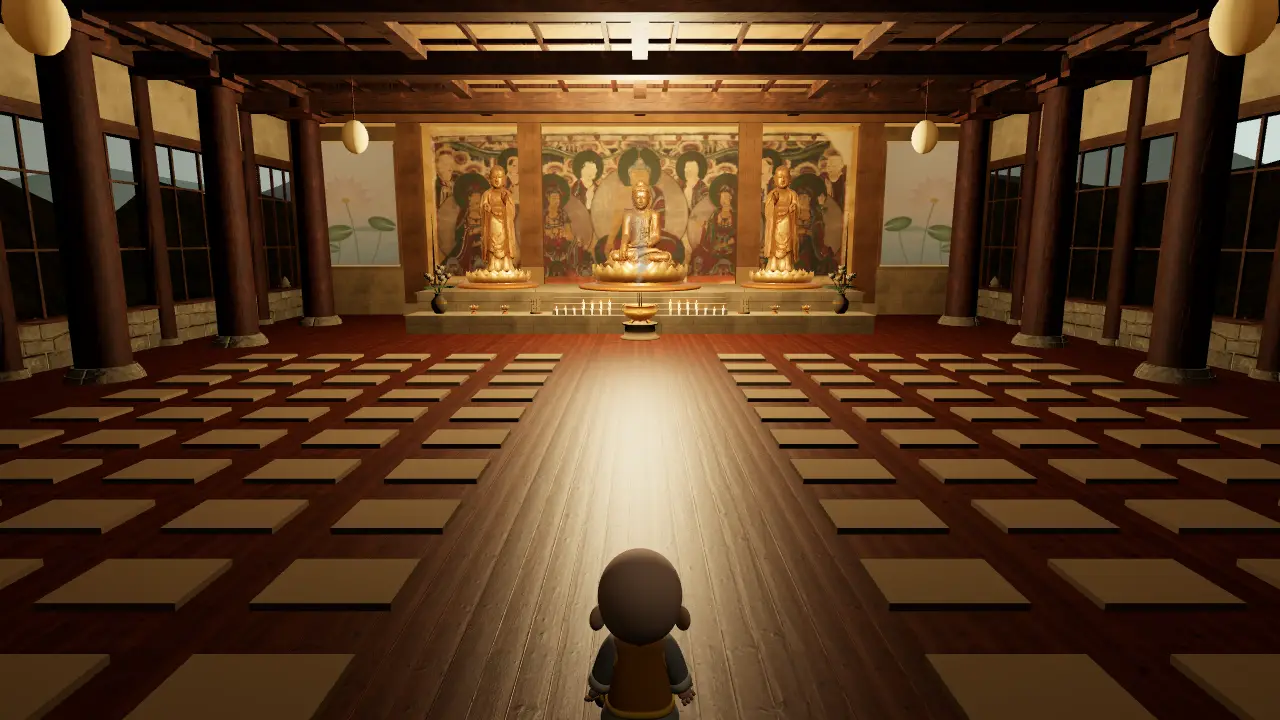
A five-minute meditation for beginners can be as simple as sitting still and counting your breaths from one to ten, then starting again. You do not need a special cushion, a clear mind or any belief. If your attention wanders a hundred times and you bring it back a hundred times, you have done the exercise correctly.
Before you start
- Set a timer, so that you are not checking the clock.
- Sit on a chair or a cushion, with your back upright but not stiff and your hands resting on your legs.
- Lower your gaze or close your eyes, whichever feels easier.
The five minutes
- First minute: settle. Notice the weight of your body on the seat, and any sound in the room. There is nothing to change.
- Find your breath. Feel it at the nostrils or in the rise and fall of your belly. Do not control it.
- Count. Silently count "one" on the out-breath, "two" on the next, and so on up to ten. Then go back to one.
- When you lose count, which you will, notice that your mind has wandered, and start again at one without scolding yourself.
- Last moments. Let the counting go for a few breaths. When the timer sounds, stay for one more breath before you move.
Common worries
"I can't stop thinking." Nobody can. Thoughts keep coming, and the practice is in noticing them and returning, not in making them stop.
"My legs ache." Shift position. Five minutes is not a test of endurance, and a chair is completely fine.
"I feel sleepy." Sit a little straighter, open your eyes, or try another time of day. If it is bedtime anyway, see our page on meditation before sleep.
"I don't feel anything." That is common. Many people find any changes show up gradually, in daily life, rather than while sitting.
Keeping it going
Five minutes each day tends to be easier to keep up than thirty minutes now and then. Link it to something you already do, such as after brushing your teeth, and if you miss a day, simply begin again the next day.
Where counting the breath comes from
Attention to the breath is among the oldest forms of Buddhist meditation. The Anapanasati Sutta, the Buddha's discourse on mindfulness of breathing in the Pali canon, describes a person going to a quiet place, sitting with their legs crossed and their body upright, and then breathing in and out with awareness: noticing a long breath as long and a short breath as short. The sutta goes on through sixteen stages, which is far beyond a five-minute exercise, but its starting point is just what you are doing here.
The sutta does not mention counting. Counting is a teaching aid added later, used in many traditions because it gives a beginner an easy way to tell whether their attention has drifted. Once you lose your place, you know. You can set the count aside whenever you no longer need it.
What the research says, and what it does not
Meditation has been studied a lot, though a good deal of that research has limitations. The US National Center for Complementary and Integrative Health (NCCIH), part of the National Institutes of Health, summarises it in careful terms. Meditation and mindfulness practices may help with anxiety, depression and insomnia, among other concerns. The word to notice is "may". Results vary, and many studies are small.
Meditation is also not free of side effects. NCCIH reports a review of studies involving more than 6,000 people in which about 8 percent reported a negative effect from a meditation practice. The most common were anxiety and depression. That rate is similar to what is reported for psychological therapies. Most people have no trouble with a few minutes of quiet sitting, but it is worth knowing that an unpleasant experience does not mean you are failing.
Sunava is not a health service and makes no health claims for its timer. If you have a mental health condition, especially one involving trauma, talk to whoever treats you before you start a regular practice.
Three other ways to spend five minutes
Counting is a good default, but it is not for everyone. If it feels tense or dull, try one of these instead.
- Label the breath. Silently say "in" as you breathe in and "out" as you breathe out. This is simpler than counting, with no number to lose.
- Listen. Close your eyes and notice sounds as they arrive: traffic, a fridge, a bird. You don't have to name or like them. This suits people for whom watching the breath makes them anxious.
- Scan your body. Move your attention slowly from your feet to the top of your head, spending a few breaths on each area. This is useful when your body feels tense.
Try one for a week before you decide whether it suits you. Changing every day makes it hard to tell.
A one-week plan
You can use this if you would like some structure. Nothing bad happens if you skip a day.
- Day 1: three minutes of counting breaths. Your only goal is to sit down.
- Day 2: three minutes again, at the same time of day.
- Day 3: five minutes. Notice when you first lose count, without judging it.
- Day 4: five minutes of listening instead of counting.
- Day 5: five minutes of whichever you liked more.
- Day 6: five minutes in a different place, such as the Sunava main hall or a park bench.
- Day 7: five minutes, then one minute to think about what you would keep or change next week.
How to tell whether it is working
Beginners often judge a sitting by how calm they felt. This is not a very reliable measure. A restless session in which you came back to your breath fifty times has given you fifty repetitions of the skill. A calm one might just mean you slept well.
Rather than watching for special feelings, you could look for small changes in ordinary life over a few weeks. Perhaps you notice sooner that you are annoyed. Perhaps you can leave a thought alone for a moment longer. These things can be subtle or absent, and they are not guaranteed. If after a good trial you find sitting unhelpful or unpleasant, it is fine to stop.
Posture and comfort
You don't need to sit on the floor. The old instructions mention crossed legs, but the point is a body that stays alert and comfortable.
- On a chair: feet flat, back away from the backrest if you can, hands resting on your thighs.
- On a cushion: raise your hips above your knees, which makes it easier to keep your back straight.
- Lying down: this is fine if sitting is painful, though it makes it easier to fall asleep.
Physical discomfort is information. A mild itch is something you can watch for a moment. Sharp pain is a signal to move.
When five minutes feels too long, or too short
Some days five minutes will feel endless. If so, there is no rule against stopping at two, and two minutes of real attention is more useful than five minutes of watching the clock. The Sunava timer also has a 3-minute option for exactly this reason. Other days you may want to continue when the timer ends. That is fine too, but it is a good idea not to raise your daily target straight away. Keep the small commitment that you know you can keep, and treat anything extra as a bonus.
Try not to compare your sessions with one another or with what you imagine other people experience. You cannot see what is going on in anyone else's mind, not even in a quiet hall full of people sitting still. Most of them are probably thinking about dinner at least part of the time. What you can see is only that they came back and sat down again, and that is what you are practising too.
Meditating with others online
Sitting alone can be hard to keep up, and the presence of others can help. In the Sunava temple, go to the main hall, sit on a cushion and press Meditate to start a quiet 3, 5 or 10-minute timer. Others may be sitting around you, though no one can speak to you or see what you are doing.
Each evening at 6 pm in your time zone there is also a 20-minute shared sitting, opened and closed by a bowl and a wooden fish. You can join for all of it or for just part of it.
Meditation is not a substitute for medical or mental health care. If it stirs up something difficult, stop, and consider speaking with a professional.
Sources
- Anapanasati Sutta: Mindfulness of Breathing (MN 118), Access to Insight
- 8 Things to Know About Meditation and Mindfulness, National Center for Complementary and Integrative Health
- Meditation and Mindfulness: Effectiveness and Safety, National Center for Complementary and Integrative Health