Bedtime meditation with temple sounds: a calm night routine
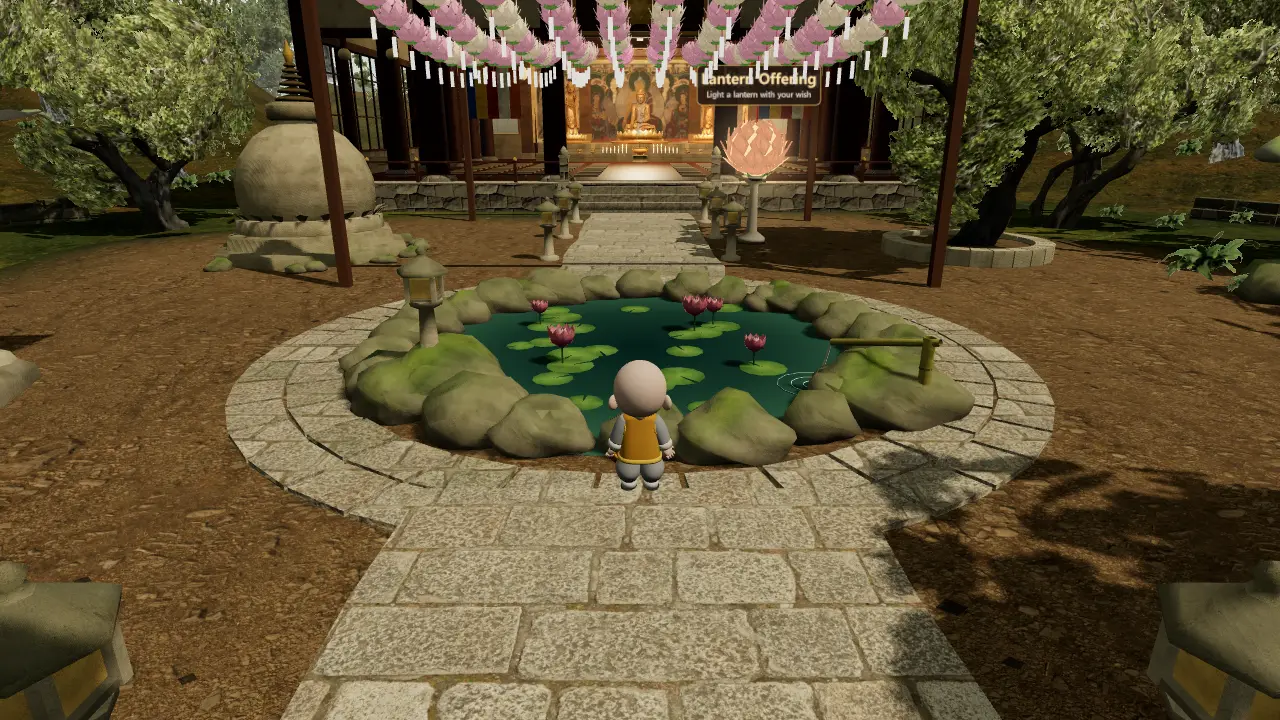
A bedtime meditation with temple sounds is a short routine in which you listen to something steady, like forest air or a fading bell, and slow your breathing as you wind down. It will not force sleep to come, but it gives a busy mind something simple and quiet to rest on at the end of the day.
Why quiet sounds can help
A steady, unhurried sound gives your attention somewhere to settle that is not your to-do list. Temple sounds suit this well because they do not ask for anything: a bell rings and fades, a wooden fish keeps an even pace, and wind moves through trees. There are no lyrics or sudden changes to follow.
A 10-minute routine
- Dim the lights and get everything ready for bed, so that you do not need to get up again.
- Listen for two minutes. Put on your temple sounds at a low volume. Just notice the sound as it comes and goes.
- Slow your out-breath for three minutes. Breathe in naturally through your nose and let the out-breath run a little longer. Do not strain.
- Scan your body for three minutes. Starting at your feet, notice each part and let it soften: calves, thighs, belly, shoulders, jaw, eyes.
- Let go for two minutes. Stop doing anything on purpose. If you drift off, that is fine.
Using Sunava at bedtime
Sunava is not a sleep app, but the temple can serve as a place to wind down.
- The courtyard has forest sound, made from recordings of real woodland with soft wind.
- The main hall has a quiet, slower atmosphere. Sit on a cushion and press Meditate for a 10-minute timer.
- The ♪ button at the top turns the sound on and off.
The website plays only while the page is open and your phone is awake, and screens can be stimulating. So our suggestion is to use it as a transition: spend ten minutes in the temple with the brightness turned down, then put the phone away and do the last steps of the routine in the dark.
Habits that support sleep
- Keep a regular time for going to bed and getting up.
- Avoid caffeine late in the day.
- Keep your phone out of reach once you lie down.
- If you are awake for a long time, get up and do something quiet until you feel sleepy again.
What the evidence says about relaxation and sleep
It is easy to find strong claims about sleep sounds and very little to support them, so here is what careful sources say.
The US National Center for Complementary and Integrative Health notes that relaxation techniques are sometimes included in cognitive behavioural therapy for insomnia, known as CBT-I, which is the most strongly recommended treatment for insomnia. On their own, relaxation techniques have only a small amount of low-quality evidence behind them. The same organisation says that meditation and mindfulness may help with insomnia, along with other concerns, though results vary between people and studies.
The honest summary is that a quiet routine before bed is a reasonable thing to try, it costs nothing, and it will not replace treatment if you have a sleep disorder. We know of no good evidence that temple sounds in particular work better than any other quiet sound, and Sunava does not claim that they do.
How much sleep you need
The UK's National Health Service says that most adults need 7 to 9 hours of sleep a night, while children and teenagers need more. The amount varies with age, health and daily routine. The NHS suggests looking at how you feel during the day. If you wake up refreshed, have enough energy to get through the day and can focus on everyday tasks, you may well be getting enough. If you find it hard to start your day, or feel very tired, irritable or sleepy, you may not be.
A useful point follows from this. A single bad night does not need fixing, and lying awake worrying about a number can itself keep you up. A routine like the one above is meant to help you stop working at sleep, rather than give you another task to get right.
An evening timetable you can adapt
The NHS's general advice on insomnia gives some timings that fit well with a temple visit. Here is one way to arrange them. Change the times to suit your own bedtime.
- Six hours or more before bed: no more coffee, tea or alcohol.
- Four hours or more before bed: finish any exercise. A gentle walk later on is unlikely to matter much, but hard exercise is better done earlier.
- One hour before bed: begin relaxing. Lower the lights, stop working, and put tomorrow's list on paper so that it does not need to stay in your head.
- Thirty minutes before bed: a short visit to the temple at low brightness, if you would like one. Sit, listen to the courtyard, and let a bell fade.
- At bedtime: close the page and put the phone away, ideally out of reach. The NHS advises against using devices right before bed. Do the body scan in the dark.
Treat this as a starting point rather than a set of rules. Few people manage all of it every night.
Three simple things to rest your attention on
Different people settle on different things. If one does not suit you, try another on a different night.
A fading sound
Ring or play a bell once and follow the note until you can no longer hear it. Notice how it gets quieter without anyone doing anything. Then wait a few breaths in the silence. This is a short and easy exercise, and most people find it holds their attention better than they expect.
Counting long out-breaths
Count each out-breath from one to ten, making it a little longer than the in-breath if that is comfortable. If you lose your place, go back to one. This is the same exercise as our five-minute meditation, only lying down, and you are allowed to fall asleep before reaching ten.
Well-wishing
Some Buddhist traditions use a form of practice in which you silently wish yourself and others well. For example: "May I rest. May the people I love rest. May everyone awake tonight rest." You may prefer other words, and you can drop it if it brings up too much. The gentle repetition is often what helps.
If your mind will not settle
Everyone has nights like this. A few things that people often find useful:
- Write it down. A few lines about what is bothering you, and the next step for each, can get things out of your head. Do this before getting into bed if you can.
- Do not check the time. Working out how few hours are left rarely helps.
- Get up if you need to. If you have been awake for a long time, do something quiet in low light until you feel sleepy. A short meditation is not a good idea if it is making you frustrated.
- Do not make it a test. There is no need to succeed at this tonight. Rest still has some value even if you stay awake.
If sleeplessness is linked to low mood, worry or a difficult event, please talk to someone. If you ever feel unsafe or have thoughts of harming yourself, contact your local emergency services or a crisis line right away.
Questions people often ask
Can I leave Sunava playing all night? It is not designed for that. The page plays only while it is open and your phone is awake, and a bright screen by the bed is the opposite of what the NHS recommends. Use it to wind down, then stop.
Are headphones a good idea? They make it easier to hear quiet sounds, but some people find them uncomfortable lying down. Keep the volume low, and take them off before you sleep.
Is it fine to fall asleep during meditation? At bedtime, certainly. If you want to practise staying alert, choose a time earlier in the day, and sit upright.
When should I see a doctor? The NHS suggests seeing a GP if changing your sleep habits has not helped, if you have had trouble sleeping for months, or if your sleep problems are affecting your daily life. Your own country's health service will have similar advice.
Making the room work for you
The room matters too, and small changes are usually enough. The NHS's sleep advice mentions making your bedroom more comfortable, along with keeping regular hours and avoiding caffeine late in the day. Dark curtains or a sleep mask, earplugs if the street is noisy, and a slightly cooler room are all simple things to try.
When to ask for help
This routine is for relaxation and is not a treatment. If you often have trouble sleeping over several weeks, or feel very tired in the daytime, speak with a doctor. If you would like to try meditating earlier in the day as well, read about five-minute meditation for beginners.
Sources
- Insomnia, National Health Service (UK)
- Sleep, NHS Every Mind Matters
- Sleep Disorders and Complementary Health Approaches, National Center for Complementary and Integrative Health
- 8 Things to Know About Meditation and Mindfulness, National Center for Complementary and Integrative Health