Buddhist temple etiquette: a guide for first-time visitors
Good Buddhist temple etiquette comes down to a few things: dress modestly, take off your shoes where others do, speak quietly, and treat Buddha images and monks with respect. Nobody expects a first-time visitor to know everything. Watching what others do, and asking when you are unsure, will carry you a long way.
What to wear
Cover your shoulders and knees, and avoid clothes that are tight, see-through or printed with loud slogans. Some temples lend wraps at the entrance. Shoes that slip off easily are useful, and clean socks are a kindness to everyone.
Entering and moving around
- Remove your shoes before you enter a hall if you see others doing so.
- Step over a raised threshold, not on it. In many traditions it is considered disrespectful to stand on it.
- Use a side door if the central door or path appears reserved. In Korean and Vietnamese temples, the central way is often kept for monks and ceremonies.
- Walk clockwise around a stupa or sacred object, keeping it on your right.
- Speak softly, and silence your phone.
Around Buddha images
- Do not climb on, sit on or lean against statues, and don't touch them unless invited to.
- Don't point your feet toward a Buddha image. When you sit on the floor, tuck them to one side or behind you. This matters especially in Thailand and other Southeast Asian countries.
- Ask before taking photos, and look for signs. Some halls don't allow them at all, and flash is rarely welcome. Don't pose with your back to an image.
Around monks and nuns
Greet them with palms together and a slight bow. Let them go first, and don't interrupt a ceremony to ask a question. In Thailand and other Theravada countries, women do not touch monks or hand things to them directly. An offering can be placed on a cloth or a table instead.
Customs by country
- Korea: many visitors make a half-bow at the first gate and toward the main hall.
- Japan: at a temple, join your palms silently. Clapping belongs at Shinto shrines, not Buddhist temples.
- Thailand: avoid raising your head above a seated monk where you can, and sit with your feet tucked away.
- Vietnam: many people enter by a side gate and bow with palms joined before the altar.
Why the rules exist
Most temple rules are not arbitrary, and they are easier to remember when you know what they are for. A temple is at once a place of worship, a home for monks or nuns, and often a cultural site. Quiet protects the people who are praying, modest clothing and removing shoes are signs of respect for the space, and limits on touching or photographing protect objects that are holy to people and sometimes hundreds of years old.
So a good general rule, when no sign tells you what to do, is to ask: would this disturb someone who is here to pray, or someone who lives here? That question alone will answer most situations you will face.
What Japan's tourism organisation advises
Japan's national tourism organisation publishes unusually clear advice, which is a useful model of what to expect.
- Calm and respectful behaviour is the first thing it asks for. Temples are less strict than shrines about the steps of prayer, but they are still places of worship.
- Shoes: wear a comfortable pair that is easy to take off and put on, along with good socks, as you may be asked to remove your shoes. Leave them on shelves at the entrance, or carry them in the plastic bags some temples provide.
- Photography: watch for signs saying it is prohibited, and do not photograph or film those areas.
- Offerings: if there is incense, you can buy a bundle by putting a coin in the offering box. Put out the flame by waving your hand. Then place the incense in the burner and pray silently. There is no need to clap.
Bringing children, and visiting with a disability
Temples are often relaxed about children, but it helps to prepare them. Explain that it is a quiet place, show them the bow before you arrive, and give them something to look for, such as a lotus or a bell. If a child gets restless, take them outside for a while, and nobody will mind. Keep hold of small children near flames and water.
If you use a wheelchair or have limited mobility, check in advance if you can. Many older halls have steps and raised thresholds. Sitting on a chair or staying at the door is fine, and you do not need to get down to the floor. A nod with joined palms is widely accepted as a gesture of respect, and staff are often glad to help if asked. Our notes on bowing with sore knees apply here too.
Staying overnight at a temple
Some countries have programmes that let you live briefly on temple grounds. Korea's Templestay offers scheduled activities such as tours of the temple, meditation, tea with a monk, formal monastic meals, the morning service, and 108 bows. Japan's temple lodgings, called *shukubo*, are also promoted to visitors.
Here the etiquette goes further, because you are joining the temple's daily life. Expect to wake up very early, to be asked to wear modest or provided clothing, to eat what is served in silence and without leaving food, and to join in cleaning. Read the host temple's own instructions carefully. Most of them are written with first-time visitors in mind.
Common first-visit worries
Here are some questions that come up again and again.
What if I walk in during a ceremony?
Stop, and stand quietly at the back or to the side, or step outside. It is fine to watch from a respectful distance, unless you are told otherwise. Do not walk between the participants and the altar.
Do I have to bow?
No. If you are not comfortable bowing because of your own religion, you can simply stand quietly or incline your head. Respectful behaviour matters more than following each gesture.
Do I have to donate?
Usually not, though an entry fee is charged at some famous temples. Donation boxes help temples with their upkeep, and a small gift is a kind thing to give if you can. If you have used a temple's candles or incense, look for a sign about the expected amount.
Can I talk to a monk or nun?
Often, yes, particularly if a temple has an information desk or runs visitor programmes. Wait for a good moment, and greet them with joined palms. Some monks in Thailand and other Theravada countries will not touch or take items directly from women, and that is a monastic rule, not a personal judgment.
Can I eat or drink on the grounds?
Follow signs and what others are doing. Many temples ask visitors not to eat in or near halls. Temple grounds often have a set place for this, and water is rarely a problem.
What should I do with my bag and hat?
Take off your hat and sunglasses in a hall. Keep your bag in front of you in tight spaces, so you don't bump into anyone or anything. Backpacks are the usual problem in narrow doorways.
If you make a mistake
You will likely do something a little wrong at some point, and that is fine. A simple apology, joined palms or a small bow will be understood almost anywhere. Most temple people are very used to visitors and are glad you came. Your attitude matters more than perfect form.
A short checklist for the day
- Wear clothes that cover your shoulders and knees, and shoes that slip off easily.
- Bring clean socks and some small change for offerings.
- Put your phone on silent before you go through the gate.
- Pause at the gate, and look around to see what others are doing.
- Read any signs at the door before you enter a hall.
- Leave with everything you brought, including rubbish.
Before you go: finding the right temple
Not every temple is set up for visitors, and it helps to find one that is. Check its website or call ahead to ask about opening hours, whether there is a service you can attend, and whether there is a language other than the local one spoken there. Larger temples may run a beginners' session or have volunteers who are glad to show you around. Small neighbourhood temples may be just as welcoming, but with less explanation, so go along with an open mind. If you live outside Asia, immigrant community temples are often very happy to receive respectful visitors, although a service may not be in your language.
Practising before you go
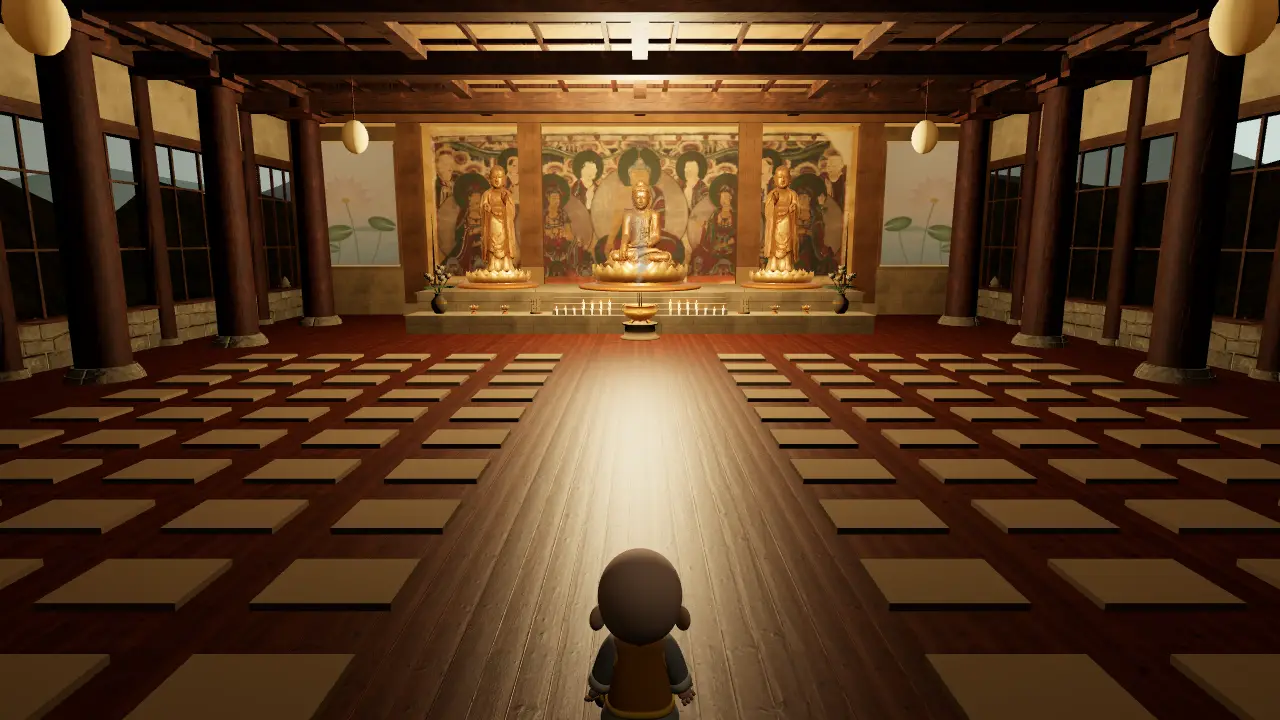
If you feel nervous, it can help to rehearse. In the Sunava online temple you can walk through a courtyard and a hall, practise the three bows, and learn where candles and incense are offered before visiting in person. Keep in mind that it is an original space and not a model of any real temple, so local customs still come first.
Sources
- Shrine and temple traditions, Japan National Tourism Organization
- Shrine and Temple Visits: Best Practices, Japan National Tourism Organization
- Etiquette in Japan, Japan National Tourism Organization
- Templestay, Cultural Corps of Korean Buddhism
- Stupa, Encyclopaedia Britannica