Candle and incense offerings in Buddhism: meaning and how to offer
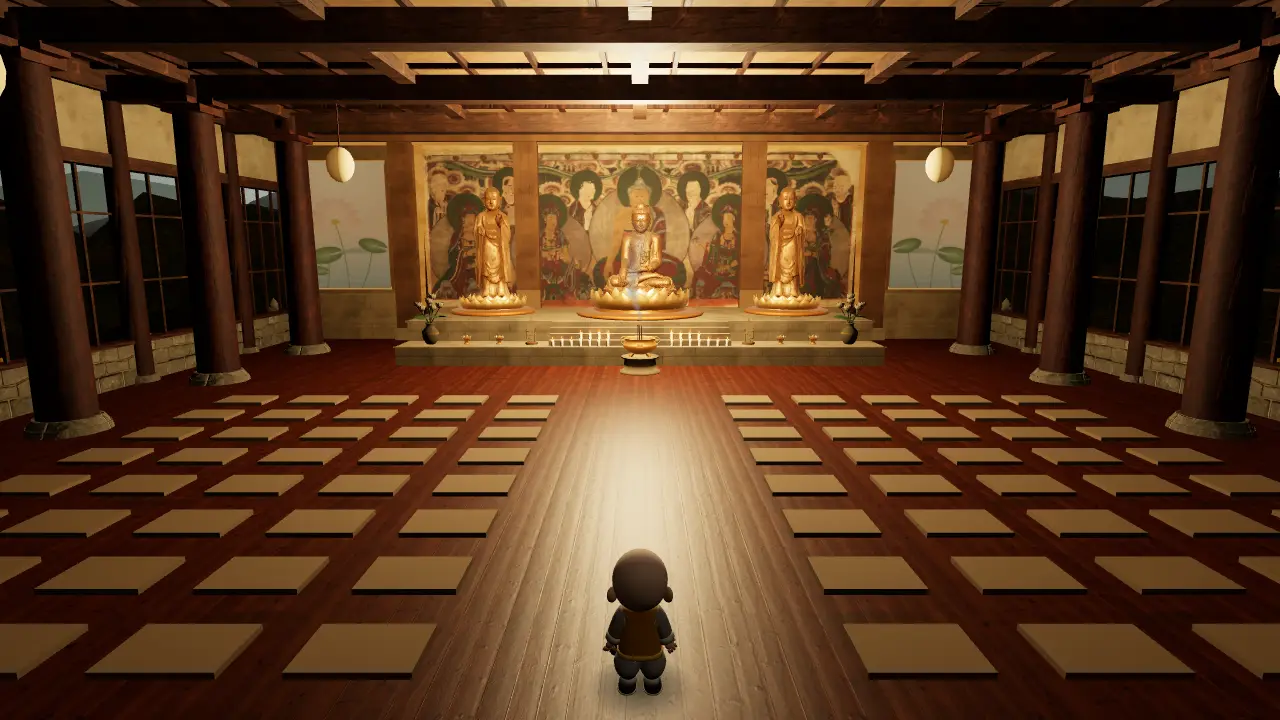
In Buddhism, candles and incense are offered as signs of respect, with the candle often taken to stand for wisdom and the incense for virtue that spreads quietly in all directions. Flowers are commonly added as a reminder that all things change. These meanings are teaching aids rather than fixed rules, and they vary between traditions.
What each offering represents
- Candle or lamp: light that dispels the darkness of not knowing.
- Incense: a fragrance that travels without effort, like the influence of good conduct.
- Flowers: beautiful today and fading tomorrow, a plain lesson in impermanence.
- Water, fruit or food: in some temples, a gift of daily necessities.
No offering is thought of as paying for anything. What matters in most teaching is the intention behind it.
How many incense sticks?
There is no single answer.
- Thailand: three sticks are common, often explained as honouring the Triple Gem, with flowers and candles alongside.
- Japan: at a temple burner, *shoko* uses pinches of powdered incense, and the number depends on the school. Many visitors make one to three.
- Korea: a single stick is common at a temple hall.
- Vietnam: one or three sticks is the usual practice.
If you are unsure, watch the person ahead of you, or use one stick.
Offering at a real temple
- Join your palms and bow slightly before you begin.
- Light your candle or incense from the temple's own flame if there is one, not from another person's offering.
- Put a flame out by waving your hand, not by blowing on it. Many people consider breath impure here.
- Place incense upright in the burner, without crowding others.
- Step back, join your palms and bow again.
Be careful of loose sleeves and hair near open flames. A small donation is usually welcome if you take a temple's candles, but look for a sign, as customs differ.
Two kinds of offering
Some Theravada teachers divide offerings into two types. The first is material offering, or *amisa-puja*: flowers, candles, incense and food, which are the things you can see on an altar. The second is the offering of practice, or *patipatti-puja*: keeping the precepts, developing the mind and living well. Material gifts are understood to nurture generosity and virtue. Offering practice is often described as the higher of the two.
This helps explain why a small candle lit with care can be held in the same regard as a much larger one. Candles and incense are a way of expressing what you value, and they make sense next to the way you live, not as a replacement for it.
What these gifts mean in a daily offering
A pūjā, the general word for a devotional offering, usually mixes words with physical acts. People recite verses, bow, and join their palms, often in front of an altar, and place their offerings there. In Theravada settings a candle or lamp is commonly described as the light of wisdom, incense as the fragrance of moral conduct, and flowers as a lesson in impermanence.
Traditions differ in how much they stress these readings. Within the framework of karma and rebirth, a pūjā is also understood to generate merit, as well as qualities such as respect and gratitude, and it can serve as preparation for meditation. Sunava does not claim that a virtual offering earns merit. You can decide for yourself what, if anything, it means to you.
Incense at Japanese temples
Japan's national tourism organisation gives simple advice for visitors, and it is a helpful example of how open temples can be. Temples tend to be less strict in ritual than Shinto shrines. Many temples have incense, and you can buy a bundle by putting a coin in the offering box, then light it and place it in the burner. You put out the flame by waving your hand, not by blowing on it. Many visitors fan the smoke toward themselves, since it is believed to have healing powers. Then you join your hands in a silent prayer, with no clapping.
Other countries have their own habits, so treat this as one good example instead of a universal rule. If you are in a temple you do not know, you can follow the person in front of you.
Choosing a real candle or incense for home
If you want to make a small offering at home, a few practical points are worth considering.
- Burn it somewhere stable. Use a proper holder on a flat surface, away from curtains, papers and anything a pet or child could knock over.
- Do not leave it unattended. A short-lived candle or a single stick of incense is enough. Put it out before you leave the room or go to sleep.
- Let in fresh air. Burning incense in a closed room produces smoke. If you have asthma or a similar condition, or there is a baby in the home, consider leaving out the incense and offering a flower or a little water instead.
- Keep it simple. A clean shelf and a single flower can be just as sincere. Nothing has to be bought for an offering to be real.
If you can't use a flame
Many places do not allow open flames, including dormitories, hospitals and care homes. There are some alternatives:
- A battery candle is used in some homes and even some temple halls. It is a practical choice, and the gesture is the same.
- A flower or a glass of clean water on a shelf is an offering in many traditions.
- You can offer the time itself. Sit for a few breaths in front of a picture, or do nothing but join your palms.
- You can offer in a virtual temple. There is no smoke or fire, which is a practical help for many people. It is not the same as a real flame, and it doesn't try to be.
The three kinds of incense in Sunava
Sunava offers three kinds of incense. They exist so that you have a small choice to make and a moment to pause, not because one is better than another. Choose whichever suits you. Each burns in the same way, for 24 hours, in the burner in front of the altar, and anyone in any room can see it.
Questions people often ask
Does an offering need to be expensive? No. In the story of the poor woman's lamp, which is often told for this reason, the smallest gift is the one remembered.
Can I make an offering for someone who has died? Many people do. If you are grieving, a temple or a teacher in your own tradition can tell you about their customs. In Sunava, you can simply light a candle while thinking of them.
Should I offer before or after bowing? Temples vary. A common order is to bow slightly, make the offering, step back and then bow. You can try the same order in Sunava with three bows.
Is it all right if I don't feel anything? Yes. Many people do not feel anything in particular. Offering is something you do, not something you have to feel.
Can I take a candle home from a temple? Usually a candle you pay for is meant to be lit there. Ask if you are unsure.
A short offering you can do at home
If you would like to try this without any fuss, here is a routine of about two minutes.
- Clear a small space. A shelf or the corner of a table is enough. Wipe it down, which is often the most peaceful part.
- Set down what you have. It could be a flower from outside, a glass of water or a small candle.
- Pause for three breaths with your palms together, and think about why you are doing this. It might be for someone you care about, or just for a calmer evening.
- Light the candle, if you are using one. Watch the flame for a moment without doing anything else.
- Bow, if you wish, then get on with your day or sit for a few minutes.
- Put out the flame before you leave, and change the water or flower when it starts to fade. Noticing the flower fade is part of the lesson.
How to offer a candle and incense online
The altar in the Sunava main hall has a candle stand and an incense burner.
- Go up the steps and walk toward the altar.
- Press the button that appears when you are close.
- For incense, pick one of three kinds. For a candle, just light it.
Each stays lit for 24 hours, and other visitors can see it in every room, including after you have left. Each device can offer one of each at a time, so there is no reason to hurry or to offer more than once. Afterward you might make three bows, or light a lantern in the courtyard.
Sources
- Pūjā (Buddhism), Wikipedia
- Shrine and temple traditions, Japan National Tourism Organization
- Shrine and Temple Visits: Best Practices, Japan National Tourism Organization
- Lamp Offering, Fo Guang Shan International Translation Center